
1. Introduction to Workout Routines 💪
Embarking on a fitness journey can be both exhilarating and intimidating. Whether you are a beginner setting foot in the gym for the first time or an advanced athlete looking to elevate your performance, there are workout routines tailored for every fitness level. The key is to align your routine with your current abilities while progressively pushing your limits. Incorporating regular exercise into your life offers a wealth of benefits, from improved physical health to enhanced mental well-being. 🌟
a. Importance of Regular Exercise 🏃♂️
The importance of regular exercise cannot be overstated. Physical activity supports cardiovascular health, strengthens muscles, improves flexibility, and boosts mental health by reducing stress and anxiety. Regular workouts have been shown to lower the risk of chronic diseases like heart disease, diabetes, and certain cancers. Exercise also improves your mood by releasing endorphins, the body’s “feel-good” hormones, which help combat depression and anxiety. 😊
Beyond physical and mental benefits, regular exercise builds a sense of discipline and structure in your life. Whether you aim for 20 minutes of daily activity or engage in more intense routines, the consistent habit of engaging in regular workouts will lead to long-term improvements in both physical and emotional health. Moreover, as you consistently exercise, you’ll notice enhancements in your sleep quality 💤, energy levels, and even cognitive functions. For those just starting or returning after a break, it’s important to ease into a fitness routine that’s realistic and sustainable over time.
b. Overview of Different Fitness Levels 📊
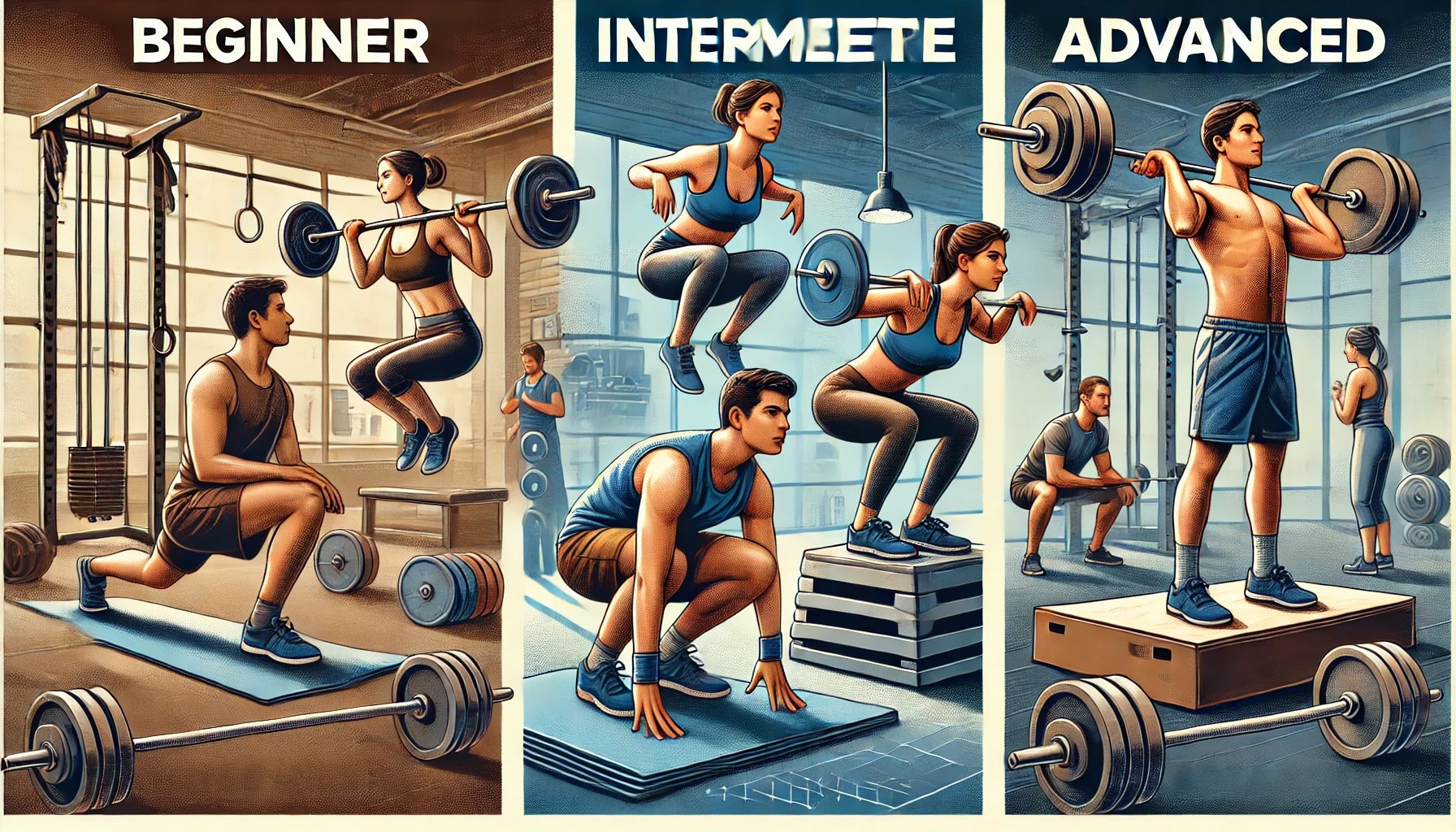
Workout routines are not a one-size-fits-all solution. Fitness levels generally fall into three categories: beginner, intermediate, and advanced, and each requires a tailored approach to avoid injury and ensure progress.
- Beginner 🟢: Individuals at this level may have little to no experience with structured exercise routines. The focus for beginners should be on learning correct form, building foundational strength, and developing a consistent workout habit. Low-impact exercises, bodyweight movements, and shorter workout durations are suitable.
- Intermediate 🟡: At this stage, individuals have a solid grasp of basic exercises and can handle moderate-intensity workouts. The intermediate level often incorporates weights, more complex movements, and higher workout intensity. Progression is key as the body adapts to the stress of regular exercise.
- Advanced 🔴: Advanced fitness enthusiasts are accustomed to high-intensity, complex, and challenging routines. This level includes heavy lifting, intense cardio, and potentially specialized training (like HIIT or Olympic lifting). At this stage, workouts are longer, more varied, and may include personalized programs targeting specific goals like muscle hypertrophy, strength, or endurance.
As you progress through the levels, it’s crucial to periodically reassess your fitness routine to ensure continued growth and challenge. What works at the beginner level will likely need to be adjusted as your strength and stamina improve. 🚀
2. Beginner Workout Routines 👶
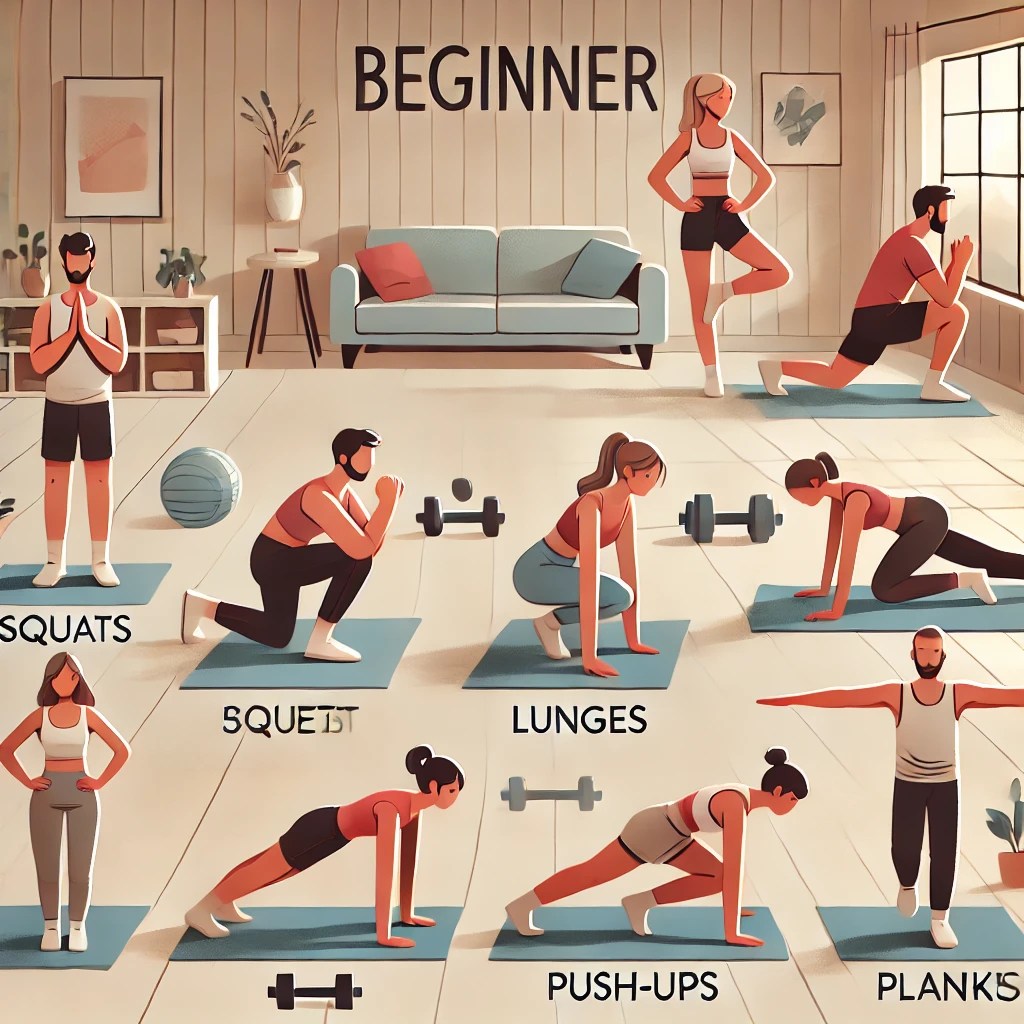
Getting started with exercise can be daunting, but with the right approach, beginners can build a strong foundation for long-term fitness success. Starting slowly and focusing on mastering proper form is key to preventing injuries and ensuring you develop good habits. 🛠️
a. Starting Point for Beginners 🏁
For beginners, the goal should be to develop consistency in working out while keeping workouts simple and approachable. Start with basic movements that work for large muscle groups without the need for advanced equipment. The goal should be 2-3 sessions per week, gradually building up to more as your fitness improves.
Here’s an example of a basic beginner workout plan:
Day 1: Bodyweight exercises (squats, lunges, push-ups) 💥
Day 2: Cardio (walking 🚶♂️, swimming 🏊♀️, or light cycling 🚴 for 20-30 minutes)
Day 3: Flexibility and mobility (stretching or yoga 🧘♀️)
b. Bodyweight Exercises 🤸♀️
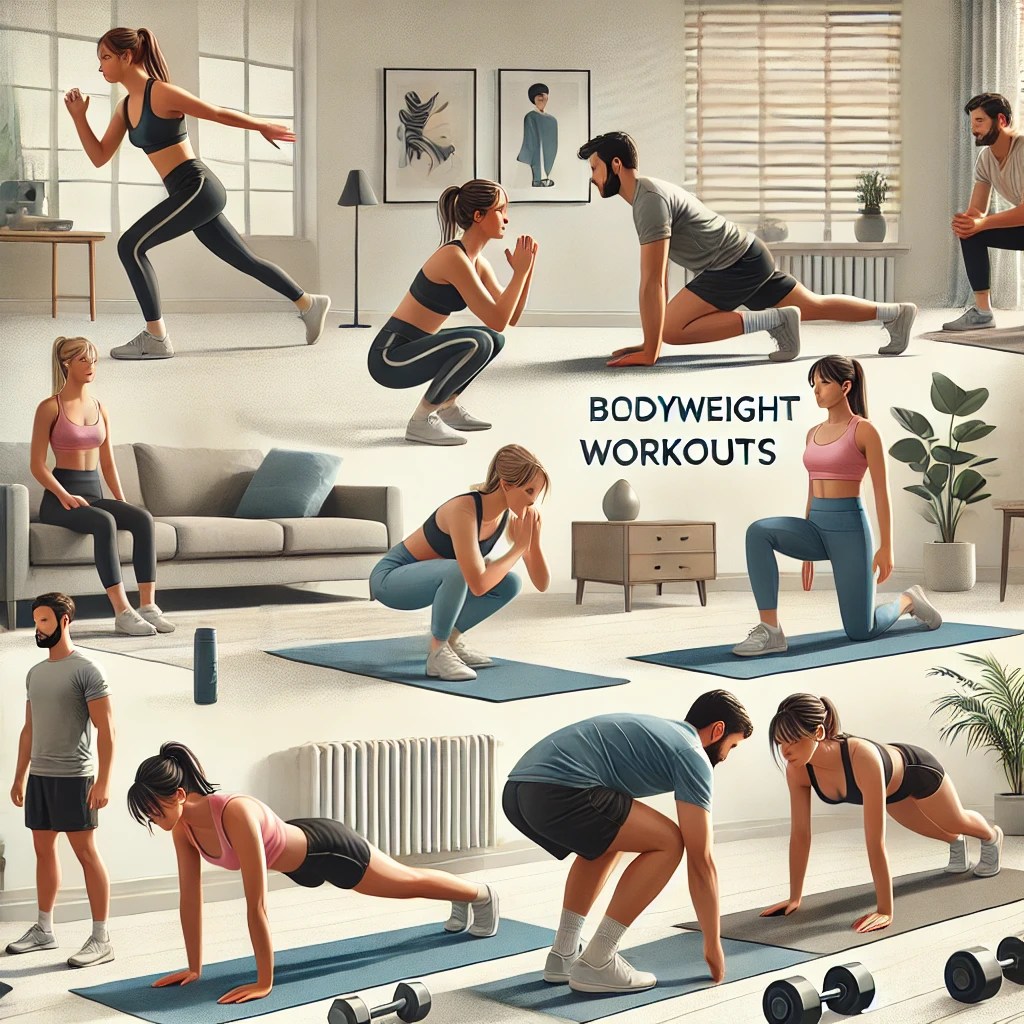
Bodyweight exercises are perfect for beginners because they require no equipment and can be done anywhere. These exercises use your own body as resistance to strengthen muscles and improve mobility. A basic beginner’s routine might include:
- Squats: A foundational lower-body exercise that strengthens the legs and glutes. Start by performing air squats and gradually increase the number of repetitions. 🍑
- Push-ups: This upper-body movement strengthens the chest, shoulders, and arms. Beginners can start with knee push-ups or incline push-ups on a bench to reduce the difficulty. 🏋️♀️
- Lunges: Lunges improve leg strength, balance, and coordination. Beginners can start with stationary lunges before progressing to walking lunges. 🦵
- Planks: A plank is an isometric core exercise that strengthens the entire midsection. Begin by holding the plank position for 20 seconds, working up to longer durations as your core strengthens. 💪
These exercises are a great starting point, and you can scale them to fit your level by adjusting repetitions or rest times between sets.
c. Stretching and Flexibility 🤸♂️
Flexibility is a critical, often overlooked component of fitness, especially for beginners. Incorporating dynamic stretches before workouts and static stretches after can help reduce the risk of injury and improve range of motion. For beginners, simple stretches targeting the hamstrings, calves, quadriceps, and shoulders are beneficial.
A stretching routine might include:
- Hamstring Stretch: Sit on the floor with one leg extended, reach toward your toes and hold for 20-30 seconds. 🦶
- Shoulder Stretch: Cross one arm across your body and gently pull on the elbow to stretch the shoulder. 🦾
- Hip Flexor Stretch: Kneel on one knee with the other foot forward, and push your hips slightly forward to stretch the hip flexors. 🏃♀️
Consistency with stretching will enhance flexibility over time, allowing for improved performance in other exercises.

3. Intermediate Workout Routines 🏃♀️
Once you’ve mastered the basics and built a consistent workout habit, it’s time to advance to the intermediate level. At this stage, the focus is on increasing strength, incorporating more resistance, and fine-tuning your workout routine for greater progress. 🔥
a. Incorporating Weights and Resistance Training 🏋️
Resistance training is essential for building muscle and increasing overall strength. At the intermediate level, introducing weights such as dumbbells, kettlebells, or barbells can take your workouts to the next level. It’s important to focus on compound movements, which work multiple muscle groups at once, for maximum efficiency.

A well-rounded intermediate routine might include:
- Barbell Squats: Building on the bodyweight squat, barbell squats target the legs, glutes, and core. Start with a manageable weight and focus on form. 🏋️♀️
- Deadlifts: This powerful movement works the entire posterior chain, including the hamstrings, glutes, and lower back. Proper form is crucial to prevent injury. 🦵
- Dumbbell Bench Press: Working the chest, shoulders, and triceps, this exercise is a natural progression from push-ups. 💥
- Pull-ups: At the intermediate level, pull-ups become a staple. They target the back, shoulders, and arms and can be modified with assistance bands if necessary. 💪
Intermediate routines should incorporate progressive overload, which means increasing the weight, reps, or sets over time to continually challenge the muscles and stimulate growth. 📈

b. Core Strength Exercises 🏋️♂️
A strong core is the foundation for nearly all movements in fitness, from running to lifting. At the intermediate level, core training should become more focused, integrating exercises that challenge balance and stability. Consider adding:
- Russian Twists: This exercise targets the oblique muscles, which are responsible for rotational movements and core stability. 🌀
- Hanging Leg Raises: This advanced core exercise targets the lower abdominals. Start with bent knees and progress to straight-leg raises as you get stronger. 🦾
- Mountain Climbers: A dynamic exercise that engages the core while providing a cardio component. 🏔️
By strengthening your core, you’ll enhance your performance in other exercises and protect your lower back from injury. 🎯

4. Advanced Workout Routines 🚀
At the advanced level, workout routines become more specialized and challenging. This stage is ideal for individuals who have mastered the basics, developed significant strength, and are looking to push their limits. The focus shifts toward more intense and complex movements, with an emphasis on performance and progress. 🌟
a. High-Intensity Interval Training (HIIT) ⚡
HIIT is a popular training method that alternates between short bursts of intense exercise and periods of rest or low-intensity recovery. It’s highly effective for burning fat, increasing cardiovascular endurance, and improving metabolic conditioning in a short amount of time. ⏳
A typical HIIT workout might look like this:
- Sprint (30 seconds) 🏃♂️
- Rest (1 minute) 🛌
- Burpees (30 seconds) 🤸♀️
- Rest (1 minute) 🛋️
- Kettlebell Swings (30 seconds) 🏋️
- Rest (1 minute) 💤
- Repeat for 4-6 rounds.
The short, intense nature of HIIT makes it an efficient workout, especially for those with limited time. However, it’s important to be aware of the high impact on joints, so proper form and recovery are essential. 🛡️
b. Advanced Weightlifting Techniques 🏋️♀️
Advanced lifters often focus on refining their technique and incorporating more specialized movements, such as:
- Olympic Lifts (Snatch, Clean & Jerk): These complex movements require precision, power, and technique. They’re great for building explosive strength and are typically performed by competitive athletes. 🏅
- Powerlifting Movements (Squat, Bench Press, Deadlift): These are the foundation of powerlifting, which focuses on lifting maximal weight in these three lifts. Progress is tracked by increasing weights over time. 📊
- Accessory Work: Advanced lifters also focus on accessory exercises that help improve weaknesses. For example, hamstring curls or banded glute bridges help build strength in areas that support major lifts. 💪
At this level, a well-planned workout routine is crucial for continued progress and injury prevention. 🛠️
5. Full-Body Workout Routines 🏋️♂️
a. Exercises Targeting All Major Muscle Groups 🦵💪
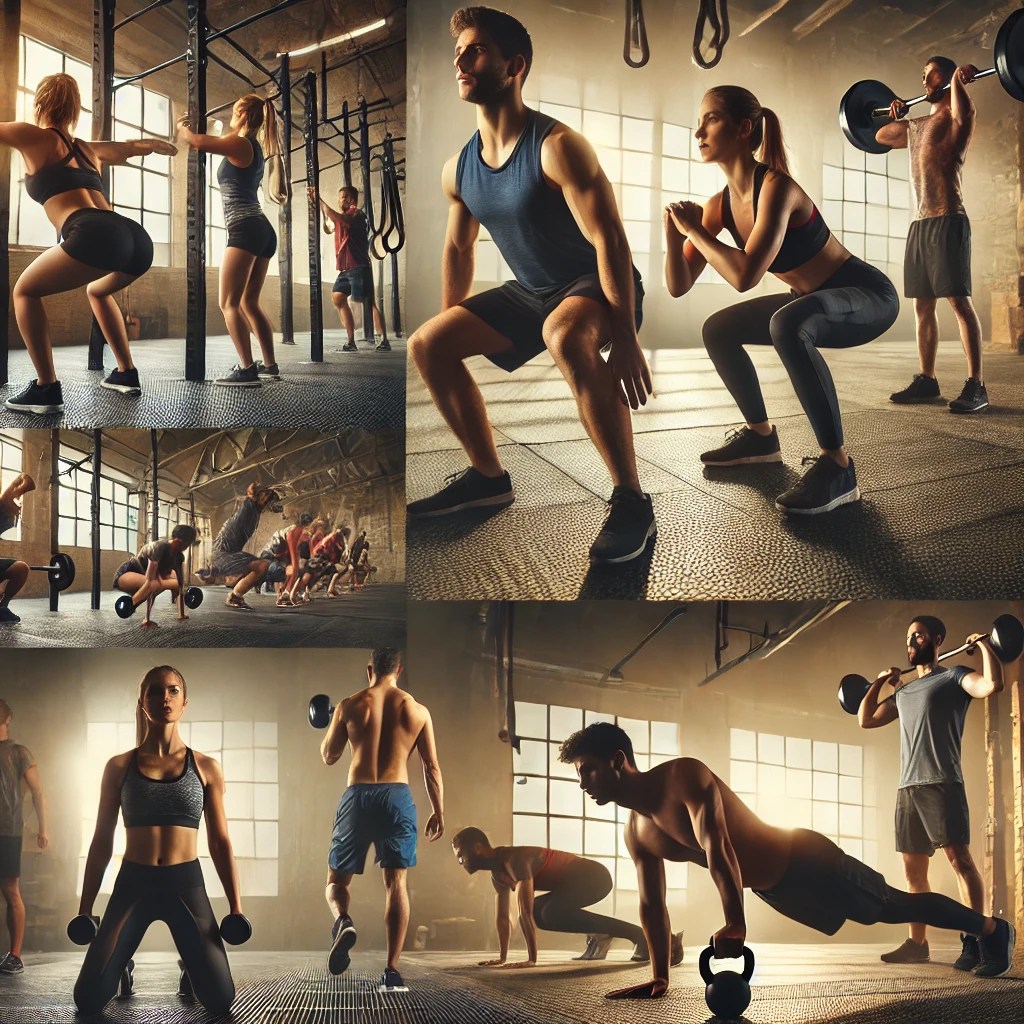
Full-body workouts are efficient and ideal for anyone looking to maximize results in minimal time. These routines involve exercises that engage multiple muscle groups simultaneously, allowing you to improve overall strength, coordination, and endurance. Examples of full-body exercises include:
Renegade Rows: This move challenges the upper body and core while improving stability and strength. 🛠️
Deadlifts: This movement works the legs, glutes, back, and core. 🍑
Squat to Press: Combining a squat with an overhead press targets the legs, shoulders, and core, making it a perfect full-body exercise. 🔥
b. Benefits of Full-Body Workouts 🏆
Full-body workouts offer several distinct advantages, making them highly popular among fitness enthusiasts of all levels. Here are some of the top benefits:
- Time Efficiency ⏰: Full-body routines allow you to work multiple muscle groups in one session, which is perfect for those with busy schedules. Instead of dedicating different days to separate body parts, full-body workouts target everything from your legs to your upper body and core. This is particularly helpful for those who only have time for a few workouts per week.
- Increased Calorie Burn 🔥: Because you’re engaging various muscle groups at once, full-body workouts tend to burn more calories compared to isolated routines. The combination of strength training and cardiovascular movements in many full-body exercises also enhances fat loss by keeping your heart rate elevated throughout the session.
- Balanced Muscle Development 🦾: Full-body workouts help you avoid muscle imbalances, which can occur when you over-train one area and neglect another. By hitting all major muscle groups in a single workout, you ensure that your body develops in a well-rounded and balanced way. This can improve posture, reduce the risk of injury, and enhance overall athletic performance.
- Improved Cardiovascular Health ❤️: Many full-body exercises incorporate compound movements that elevate your heart rate, offering both strength training and cardiovascular benefits. This leads to improved heart health, better endurance, and an overall fitter body.
- Ideal for Fat Loss and Muscle Gain 🏋️♀️: Full-body workouts are highly adaptable. If your goal is to lose fat, incorporating higher repetitions with lighter weights and short rest periods will keep your heart rate elevated, promoting fat burning. If you’re looking to gain muscle, increasing the weights and focusing on lower reps with proper form ensures that your muscles are adequately challenged.
- Variety and Flexibility 🔄: Full-body workouts can be customized to suit your goals, equipment availability, and fitness level. Whether you prefer bodyweight exercises at home or weightlifting at the gym, full-body workouts offer endless possibilities. This variety helps keep your routine fresh, preventing boredom and workout plateaus.
Here’s an example of a full-body workout routine that can be adjusted for beginner, intermediate, or advanced fitness levels:
- Warm-up (5-10 minutes): Light cardio (jump rope, jogging in place) followed by dynamic stretches
- Circuit (Repeat 3-4 times):
- Squats (12-15 reps)
- Push-ups (10-12 reps)
- Deadlifts (10-12 reps)
- Bent-over Rows (12 reps per arm with dumbbells)
- Planks (Hold for 30-60 seconds)
- Cool Down (5 minutes): Stretching and deep breathing exercises
By focusing on functional movements that engage multiple muscle groups, full-body workouts can help you become stronger, leaner, and more agile. You’ll not only improve your physical fitness but also build resilience, mental toughness, and self-discipline. 💥
6. Upper-Body Workout Routines 💪
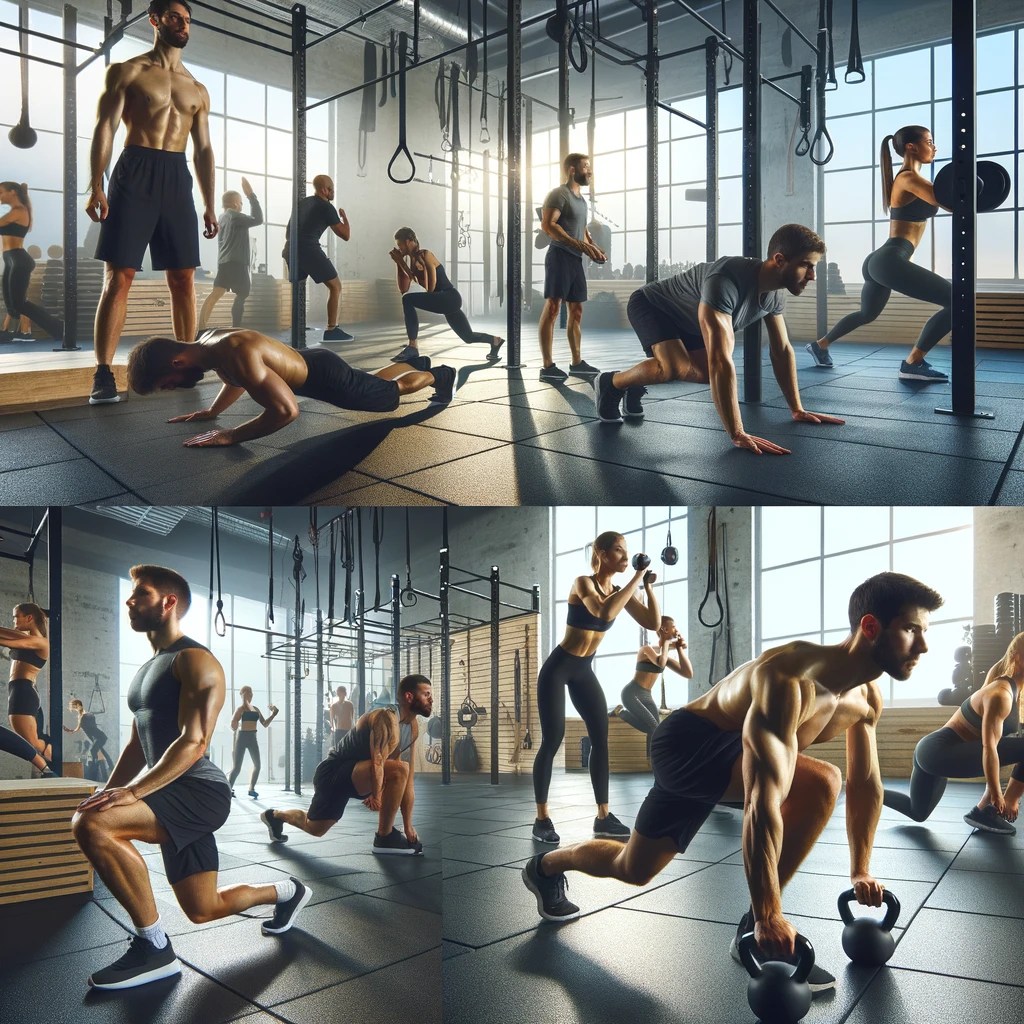
An upper-body workout focuses on strengthening the muscles of the chest, shoulders, arms, and back. These routines are crucial for developing upper-body strength, which plays a significant role in daily activities and overall fitness. Whether you want to improve your posture, increase your muscle mass, or enhance your athletic performance, upper-body workouts are an essential part of a balanced fitness program.
a. Chest, Shoulders, and Arms Focus 🦾
For many people, developing a strong upper body is a key fitness goal. Whether you want to increase the size of your biceps 💪, define your chest muscles, or strengthen your shoulders, the right exercises can make a significant difference. Here’s how to target each of these areas effectively:
- Chest Exercises 🏋️♀️:
- Push-ups: A staple exercise that targets the chest, shoulders, and triceps. Push-ups can be modified to suit different fitness levels by performing them on the knees or against a bench. To make them more challenging, try decline push-ups or weighted push-ups.
- Bench Press: The classic barbell or dumbbell bench press is one of the best ways to build strength and muscle in the chest. If you don’t have access to a bench, you can substitute this with floor presses.
- Chest Flyes: This isolation exercise targets the chest muscles, providing a good stretch and contraction. Use dumbbells or a cable machine to perform this movement.
- Shoulder Exercises 🏋️:
- Overhead Shoulder Press: Using dumbbells or a barbell, the overhead press strengthens the shoulders, upper chest, and triceps. Perform this exercise standing or seated to engage different parts of the muscle group.
- Lateral Raises: This isolation exercise targets the side delts, helping to create the coveted “V” shape in your upper body. Start with light weights and focus on maintaining control throughout the movement.
- Front Raises: Similar to lateral raises but targeting the front of the shoulders (anterior delts). Use dumbbells and raise them to shoulder height in front of your body.
- Arm Exercises 💥:
- Bicep Curls: Whether using dumbbells, a barbell, or resistance bands, bicep curls are a fantastic way to develop upper arm strength. To enhance the contraction, you can try variations such as hammer curls or concentration curls.
- Tricep Dips: This bodyweight exercise focuses on the triceps, the muscles located on the back of your upper arm. You can perform dips on parallel bars or by using a sturdy bench.
- Skull Crushers: Another triceps-focused movement, skull crushers are performed lying on a bench while extending the elbows to target the back of the arms.
b. Push-ups, Pull-ups, and Bench Press 🔥
Push-ups, pull-ups, and the bench press are fundamental upper-body exercises that help build strength and muscle across multiple muscle groups. Mastering these movements is essential for anyone looking to enhance upper-body performance and aesthetics.
- Push-ups: A versatile exercise that can be adjusted based on fitness level. To make push-ups more challenging, try performing them with your feet elevated or incorporate explosive movements like clapping push-ups. For beginners, starting on your knees or using an elevated surface can help you build strength.
- Pull-ups: One of the most effective exercises for developing back and arm strength. If you’re a beginner, you may need to use an assisted pull-up machine or resistance bands until you’re strong enough to perform them unassisted. Advanced variations include weighted pull-ups or switching to chin-ups to target the biceps more.
- Bench Press: The bench press is a powerhouse movement for developing the chest, shoulders, and triceps. Incorporating variations such as the incline bench press or close-grip bench press can help target different areas of the chest and arms.
Upper-body strength training provides several benefits beyond aesthetics. A strong upper body improves your ability to perform everyday tasks, enhances sports performance, and helps prevent injuries by stabilizing the shoulder joints. 💪
Here’s a sample upper-body workout for all fitness levels:
- Warm-up: Arm circles, light cardio, and stretching (5-10 minutes)
- Exercise Circuit:
- Push-ups (3 sets of 12-15 reps)
- Bench Press or Chest Press (3 sets of 10-12 reps)
- Overhead Shoulder Press (3 sets of 10-12 reps)
- Lateral Raises (3 sets of 12-15 reps)
- Pull-ups or Lat Pulldowns (3 sets of 8-10 reps)
- Bicep Curls (3 sets of 12 reps)
- Tricep Dips (3 sets of 10-12 reps)
- Cool Down: Stretching and foam rolling (5-10 minutes)
For optimal results, it’s essential to challenge yourself with weights or resistance that allow you to complete each set with good form while feeling fatigued by the last few reps. Increase the weights gradually as you build strength to avoid plateaus. 🏋️

7. Lower-Body Workout Routines 🦵
Lower-body workouts focus on strengthening the legs, glutes, and core, and are essential for overall fitness and athletic performance. Strong legs and glutes provide the foundation for running, jumping, lifting, and many other physical activities. Whether you’re looking to tone and strengthen or improve your athletic performance, incorporating lower-body exercises into your routine is a must.
a. Leg Strengthening: Squats, Lunges, and Deadlifts 🏋️♀️
- Squats: Squats are one of the best exercises for building lower-body strength and muscle mass. They target the quadriceps, hamstrings, glutes, and core, making them a highly effective compound movement. Variations include:
- Bodyweight Squats: Ideal for beginners to master form and build endurance.
- Barbell Squats: Once you’re comfortable with bodyweight squats, adding a barbell increases resistance and challenges your muscles further.
- Goblet Squats: Holding a dumbbell or kettlebell close to your chest provides extra resistance and helps with stability.
- Lunges: Lunges work the quads, hamstrings, glutes, and calves. They also help improve balance and coordination. Variations include:
- Walking Lunges: Step forward with alternating legs, focusing on maintaining balance and engaging your core.
- Reverse Lunges: Step backward instead of forward, which puts less stress on the knees and shifts the focus to the glutes.
- Lateral Lunges: Step to the side instead of forward or backward, targeting the inner thighs and improving lateral movement.
- Deadlifts: Deadlifts are a full-body movement that primarily works the posterior chain, including the hamstrings, glutes, and lower back. Variations include:
- Conventional Deadlift: With feet hip-width apart, lift the barbell from the floor while maintaining a neutral spine.
- Romanian Deadlift (RDL): With a slight bend in the knees, hinge at the hips and lower the weight to just below your knees, keeping the bar close to your legs.
- Sumo Deadlift: A wider stance variation that targets the inner thighs and places less stress on the lower back.

b. Glutes and Hamstrings Focus 🍑
The glutes and hamstrings play a significant role in overall lower-body strength, stability, and aesthetics. Strong glutes help support the lower back, improve posture, and enhance athletic performance, particularly in explosive movements like jumping and sprinting. Here are some exercises to specifically target the glutes and hamstrings:
- Glute Bridges: This exercise isolates the glute muscles and can be performed with just body weight or with added resistance (such as a barbell or dumbbell). It’s a great way to activate the glutes before more complex lower-body movements.
- Hip Thrusts: Similar to the glute bridge but with your upper back resting on a bench, this exercise allows for a greater range of motion and increased resistance, making it one of the best glute exercises.
- Romanian Deadlifts (RDL): As mentioned earlier, RDLs are highly effective for targeting the hamstrings and glutes. Focus on keeping your back flat and hinging from the hips.
- Bulgarian Split Squats: Elevating one leg behind you on a bench, this exercise challenges your balance and effectively isolates the glutes and quads. It’s an excellent movement for both strength and hypertrophy.
A sample lower-body workout:
- Warm-up: Light cardio (cycling, walking) and dynamic stretching (5-10 minutes)
- Circuit:
- Squats (3 sets of 12-15 reps)
- Deadlifts (3 sets of 10-12 reps)
- Walking Lunges (3 sets of 10 reps per leg)
- Glute Bridges (3 sets of 15 reps)
- Bulgarian Split Squats (3 sets of 10 reps per leg)
- Cool Down: Stretching and foam rolling (5-10 minutes)
Building strength in your lower body enhances your overall physical performance and prevents injuries. A well-rounded lower-body routine helps you develop strong, toned legs and glutes, contributing to an improved aesthetic and functional physique. 🦵🔥
8. Cardio Workouts for All Levels 🏃♂️
Cardio workouts are essential for improving cardiovascular health, burning calories, and increasing endurance. Whether you’re a beginner or an advanced athlete, cardio plays a crucial role in maintaining overall fitness. There are various types of cardio exercises, and the intensity and duration of your cardio routine will depend on your fitness goals, experience level, and preferences. In this section, we’ll explore cardio options for all fitness levels, ranging from low-impact exercises like walking to high-intensity activities like running and jumping rope.

a. Walking, Running, and Jumping Rope 🏃♀️🪁
- Walking 🚶♀️
Walking is the most accessible and low-impact form of cardio, making it perfect for beginners or individuals with joint issues. It’s an excellent starting point for those new to exercise, and it can easily be adjusted by increasing the speed, distance, or incline to make it more challenging. Walking for 30 minutes to an hour daily has significant health benefits, including improved cardiovascular health, enhanced mood, and better weight management.
- For Beginners: Start with 15-20 minute walks 3-4 times a week at a comfortable pace.
- For Intermediate: Incorporate brisk walking and aim for 45-60 minutes, 4-5 times a week.
- For Advanced: Add intervals of walking uphill or at a faster pace to increase intensity.
- Running 🏃♂️
Running is a more advanced form of cardio that can dramatically improve cardiovascular endurance, burn calories, and strengthen the legs. However, it requires a good foundation of lower-body strength and joint stability to prevent injuries like shin splints or knee pain. Starting with a walk-run program is a great way to transition from walking to running for beginners.
- For Beginners: Try the walk-run method. Walk for 3 minutes, run for 1 minute, and repeat for 20-30 minutes.
- For Intermediate: Run continuously for 30-40 minutes at a moderate pace, 3-4 times a week.
- For Advanced: Incorporate speed work like intervals or hill sprints. For example, run at a fast pace for 1 minute, followed by 2 minutes of light jogging, and repeat for 30-40 minutes.
- Jumping Rope 🪁
Jumping rope is an effective full-body cardio workout that not only burns calories but also improves coordination and footwork. It can be done anywhere and is easily scalable depending on your fitness level. Jumping rope can serve as both a warm-up or the main workout.
- For Beginners: Start with 30 seconds of jumping followed by 30 seconds of rest. Repeat for 10-15 minutes, gradually increasing duration as you get more comfortable.
- For Intermediate: Jump for 1 minute, followed by 30 seconds of rest. Repeat for 20-30 minutes.
- For Advanced: Try alternating between single-leg jumps, high knees, and double unders (where the rope passes under your feet twice per jump). Perform 30-45 seconds of each variation, with short rest breaks in between.

b. Swimming, Cycling, and Rowing 🚴♀️🏊♂️
For those who prefer low-impact cardio options, swimming, cycling, and rowing are excellent choices. These exercises are gentle on the joints while providing a full-body workout. They’re ideal for individuals recovering from injuries or those who want to build endurance without the high-impact stress of running or jumping.
- Swimming 🏊♀️
Swimming is a fantastic full-body exercise that works your arms, legs, core, and cardiovascular system simultaneously. It’s gentle on the joints, making it perfect for individuals with arthritis or those recovering from injuries. Swimming also helps improve lung capacity and overall endurance.
- For Beginners: Swim for 10-15 minutes at a relaxed pace. Alternate between swimming and floating or using a kickboard to get used to the water.
- For Intermediate: Swim continuously for 20-30 minutes. Incorporate different strokes such as freestyle, breaststroke, or backstroke.
- For Advanced: Swim laps at a fast pace for 45-60 minutes, incorporating interval training (e.g., sprint for 50 meters, rest for 30 seconds, and repeat).
- Cycling 🚴♂️
Cycling is another low-impact cardio exercise that strengthens the legs and improves cardiovascular fitness. It can be done outdoors or indoors on a stationary bike. Cycling engages the quadriceps, hamstrings, and glutes, making it a great option for building lower-body strength while burning fat.
- For Beginners: Start with 20-30 minute sessions at a comfortable pace, either outdoors or on a stationary bike.
- For Intermediate: Cycle for 45-60 minutes, increasing the resistance or speed as your fitness improves.
- For Advanced: Incorporate hill climbs or high-resistance intervals. Try cycling at a high intensity for 2-3 minutes, followed by 1-2 minutes of recovery, and repeat for 45-60 minutes.
- Rowing 🚣♀️
Rowing is an excellent full-body cardio exercise that targets the back, shoulders, arms, legs, and core. It’s a great way to build both strength and endurance. Rowing can be done on a rowing machine or, for those near a body of water, in a boat. This low-impact exercise is especially useful for individuals who want a full-body workout without putting stress on their joints.
- For Beginners: Start with 5-10 minutes of rowing at a light resistance. Focus on form before increasing intensity.
- For Intermediate: Row for 20-30 minutes at a moderate pace. Increase the resistance slightly to challenge yourself.
- For Advanced: Perform high-intensity intervals of 1-2 minutes at full speed, followed by 1 minute of rest. Repeat for 30-45 minutes.
9. Strength Training Essentials 🏋️♀️
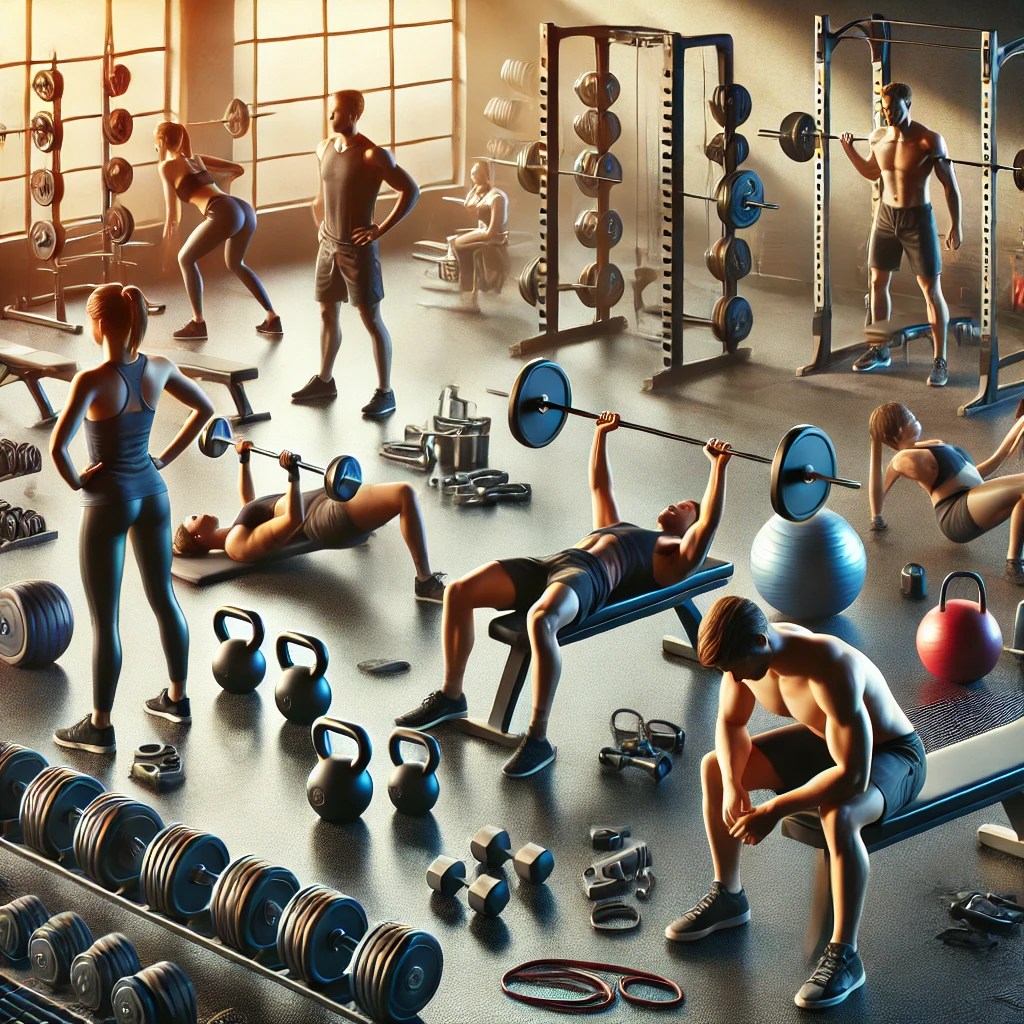
Strength training, also known as resistance training, is a key component of any well-rounded fitness program. It helps build muscle, improve bone density, increase metabolism, and enhance overall functional strength. Strength training can be done with free weights, resistance machines, or even just your body weight.
a. Importance of Resistance Training 💪
Resistance training is crucial for everyone, regardless of fitness goals. Whether you’re aiming to lose fat, build muscle, or maintain overall health, strength training should be part of your routine. Here’s why:
- Muscle Growth (Hypertrophy): Strength training stimulates muscle fibers, causing them to grow. This process, known as hypertrophy, not only enhances your appearance but also boosts your metabolic rate. More muscle means you burn more calories even at rest. 🔥
- Increased Strength: Building strength through resistance training improves your ability to perform daily activities and makes you more resilient in physical tasks, whether it’s carrying groceries, playing sports, or running. 🦸♂️
- Bone Health: Resistance training improves bone density, which is especially important as you age. Stronger bones reduce the risk of fractures and osteoporosis. 🦴
- Injury Prevention: Strengthening muscles around your joints can help prevent injuries. For example, strengthening the quadriceps and hamstrings can reduce knee pain and injury risk. 🛡️
- Fat Loss: Contrary to the myth that cardio is the only way to lose fat, strength training is highly effective for fat loss. It builds muscle, which in turn burns more calories and fat. 🔥
b. Free Weights vs. Machines 🏋️♂️
When it comes to resistance training, you can choose between free weights (like dumbbells and barbells) and machines. Both have their advantages, and incorporating a combination of both into your routine can be beneficial.
- Free Weights: Free weights, such as dumbbells and barbells, allow for a greater range of motion and engage stabilizing muscles. They are excellent for functional strength and improving coordination.
- Pros: Greater range of motion, works stabilizing muscles, versatile (can be used for many exercises), develops functional strength.
- Cons: Requires more balance and coordination, higher risk of injury if form is incorrect.
- Machines: Resistance machines are typically easier to use and guide your movement, making them ideal for beginners or for isolating specific muscles.
- Pros: Easier to use, lower risk of injury, good for beginners, allows for muscle isolation.
- Cons: Limited range of motion, less focus on stabilizing muscles, may not be as functional.
For example, if you’re focusing on compound movements like squats or deadlifts, free weights would be more effective because they recruit multiple muscle groups. However, if you’re aiming to isolate a specific muscle, such as the quadriceps, a leg extension machine may be a better option.
Here’s a sample strength training split:
- Day 1: Upper body (push movements) – Bench press, shoulder press, triceps dips
- Day 2: Lower body – Squats, deadlifts, lunges
- Day 3: Upper body (pull movements) – Rows, pull-ups, bicep curls
- Day 4: Core and stability – Planks, leg raises, Russian twists
Strength training is a cornerstone of long-term fitness and health. Regardless of your fitness level, integrating both free weights and machines will help you build muscle, prevent injury, and enhance overall performance. 🏋️♀️🔥
10. Core and Abdominal Workout Routines 🤸♂️
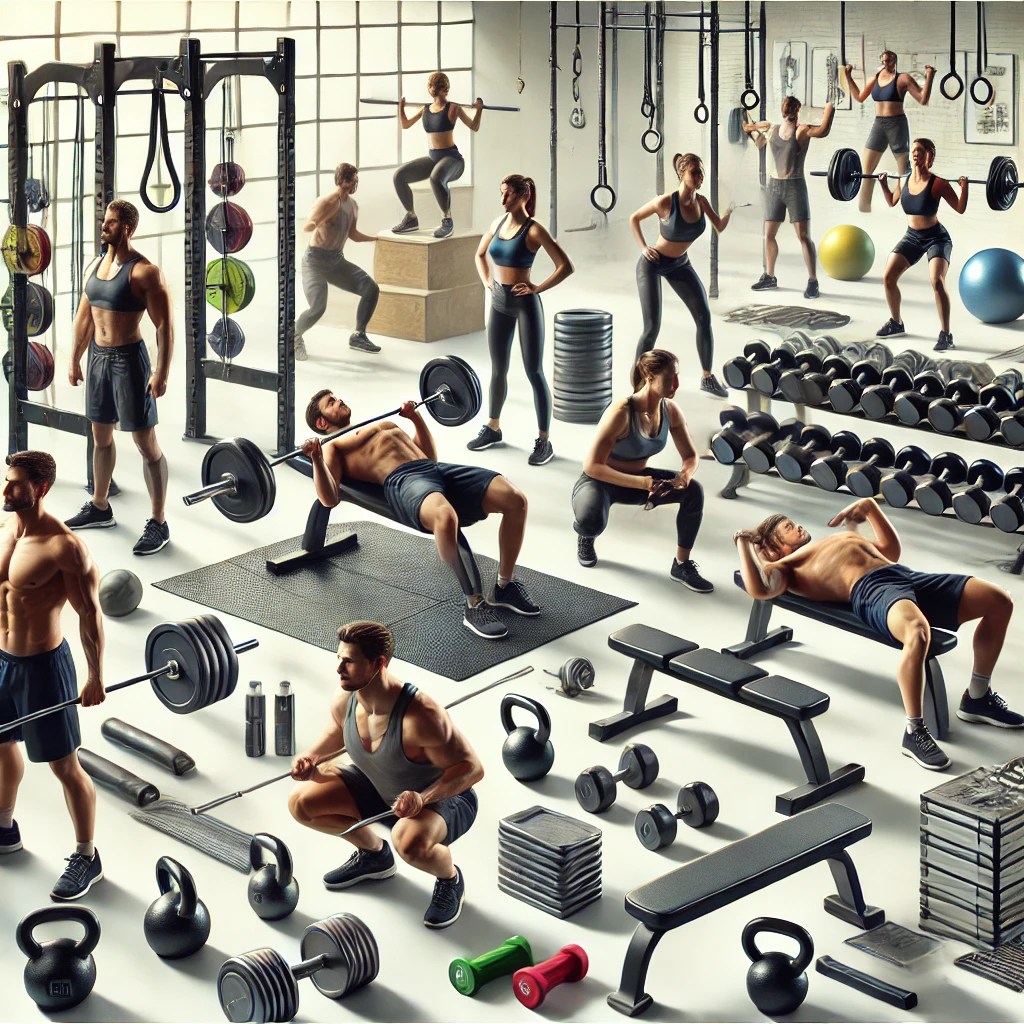
A strong core is essential not only for aesthetic purposes but also for functional strength and injury prevention. Your core stabilizes your entire body, making it fundamental to every movement, whether you’re running, lifting weights, or even sitting at a desk. Core exercises target the muscles of the abdomen, lower back, and pelvis, providing stability and balance.
a. Planks, Crunches, and Leg Raises 🧘♂️
Core exercises come in many forms, from static holds like planks to dynamic movements like crunches and leg raises. Here’s how to perform these fundamental exercises:
- Planks:
- How to Do It: Start in a push-up position, with your elbows bent and forearms on the ground. Keep your body in a straight line from head to heels, engaging your core.
- Benefits: Planks engage the entire core, including the abs, obliques, and lower back. They’re also great for improving posture and stability.
- Variations: Side planks (to target obliques), plank with leg lifts, plank to push-up.
- Crunches:
- How to Do It: Lie on your back with your knees bent and feet flat on the floor. Place your hands behind your head, and curl your upper body towards your knees by contracting your abdominal muscles.
- Benefits: Crunches focus on the rectus abdominis, the “six-pack” muscles. They are a beginner-friendly movement for building abdominal strength.
- Variations: Bicycle crunches, reverse crunches, weighted crunches.
- Leg Raises:
- How to Do It: Lie on your back with your legs straight. Lift your legs until they are perpendicular to the floor, then slowly lower them back down without letting them touch the ground.
- Benefits: Leg raises target the lower abs, an area that is often more difficult to engage. They also strengthen the hip flexors and lower back.
- Variations: Hanging leg raises, bent-knee leg raises.
b. Developing Stronger Core Muscles 💪
While crunches and leg raises are effective for building core strength, it’s important to incorporate a variety of movements to target the core from all angles. A well-rounded core workout includes exercises that target the upper abs, lower abs, obliques, and lower back.
Here are some advanced core exercises to further develop core strength:
- Russian Twists: Sit on the floor with your knees bent and feet flat. Lean back slightly, engage your core, and twist your torso from side to side, touching the floor on each side. Add a weight or medicine ball for more resistance. This exercise targets the obliques.
- Hanging Leg Raises: Hang from a pull-up bar with your arms straight. Slowly lift your legs up to a 90-degree angle or higher. This is a challenging move that targets the lower abs and hip flexors.
- Ab Rollouts: Using an ab wheel, roll your body forward while keeping your core tight, then return to the starting position. This movement challenges the entire core, including the upper abs, lower abs, and obliques.
A sample core workout might look like this:
- Warm-up: Light cardio and stretching (5-10 minutes)
- Exercise Circuit:
- Planks (3 sets of 30-60 seconds)
- Bicycle Crunches (3 sets of 15 reps per side)
- Russian Twists (3 sets of 20 reps)
- Hanging Leg Raises (3 sets of 10-12 reps)
- Ab Rollouts (3 sets of 10 reps)
- Cool Down: Stretching (5-10 minutes)
By consistently incorporating a variety of core exercises, you’ll strengthen the muscles that support your spine, improve your balance, and enhance your performance in other workouts. A strong core is the foundation of a strong body! 🏋️♀️
11. Flexibility and Mobility Workouts 🤸♂️
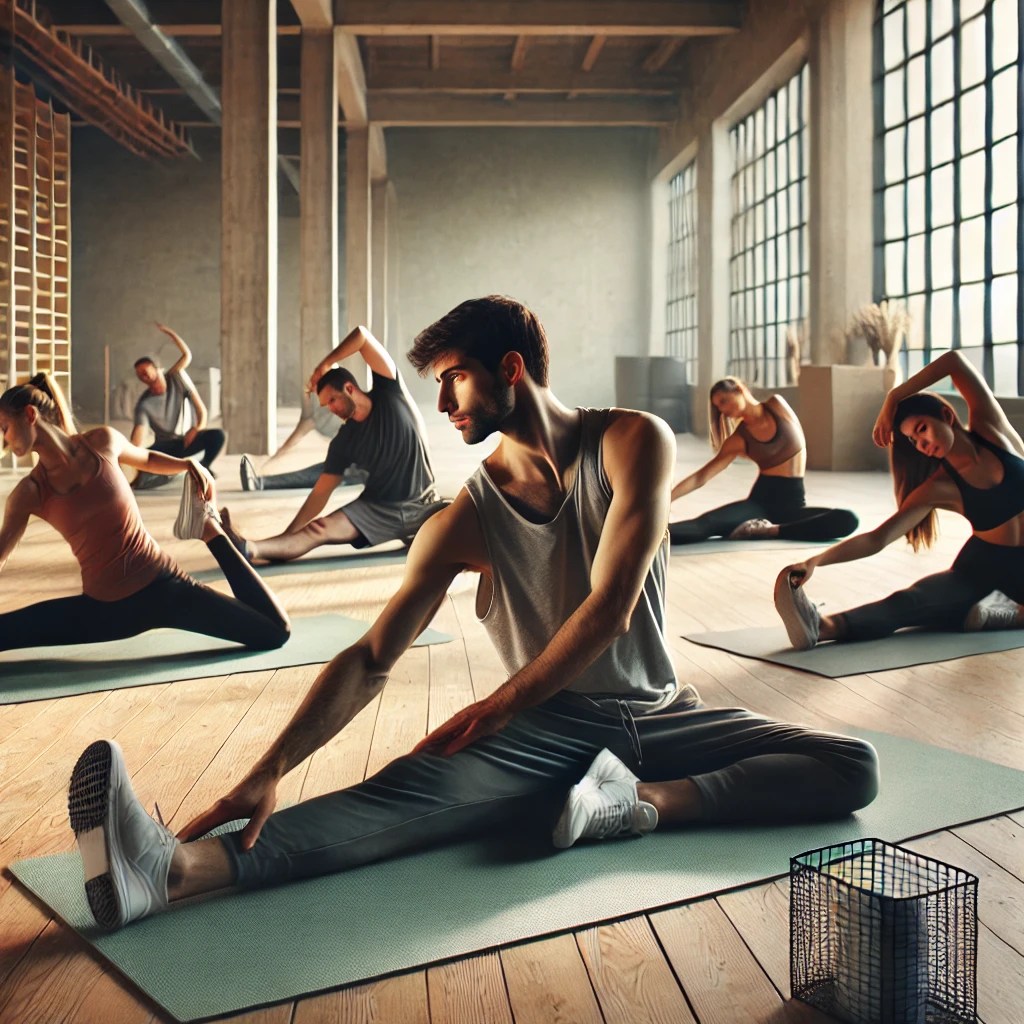
Flexibility and mobility workouts are often neglected but are crucial components of a well-rounded fitness routine. These exercises enhance your range of motion, improve posture, and reduce the risk of injury. Whether you’re lifting weights, running, or performing daily tasks, flexibility and mobility help you move more efficiently and comfortably. These types of exercises should be integrated into your routine regardless of your fitness level.
a. Importance of Stretching 🧘♀️
Stretching is essential for maintaining healthy muscles and joints, improving overall flexibility, and preventing injuries. It helps increase blood flow to your muscles, reducing stiffness and enhancing recovery after workouts. Stretching can be divided into two main categories: dynamic stretching, which is done before a workout to warm up the muscles, and static stretching, which is performed after a workout to relax and lengthen the muscles.
- Dynamic Stretching 🔄
- Purpose: Dynamic stretches prepare your body for activity by increasing blood flow, heart rate, and range of motion. These stretches mimic the movements you’ll perform during your workout, ensuring your muscles are ready to work.
- Examples:
- Leg Swings: Swing one leg forward and backward in a controlled motion to loosen up the hip flexors and hamstrings.
- Arm Circles: Rotate your arms in circles, gradually increasing the size of the circles to warm up the shoulders.
- Lunges with a Twist: Perform a forward lunge while twisting your torso toward the side of the leading leg. This stretch opens up the hips and activates the core.
- Static Stretching ⏳
- Purpose: Static stretching involves holding a stretch for a prolonged period (typically 20-30 seconds) to lengthen the muscle. It’s most beneficial after a workout when your muscles are warm and pliable.
- Examples:
- Hamstring Stretch: Sit with one leg extended and reach toward your toes, holding the stretch for 20-30 seconds.
- Quadriceps Stretch: Stand on one leg and pull the opposite foot toward your glutes, holding the stretch to lengthen the quads.
- Shoulder Stretch: Bring one arm across your body and use your other hand to gently pull the arm closer to stretch the shoulders and upper back.
b. Yoga and Pilates for Flexibility 🧘♂️
Yoga and Pilates are two of the most effective forms of exercise for improving flexibility, mobility, and balance. Both practices focus on controlled movements, breathing, and stretching, making them ideal for increasing range of motion and relieving tension in the muscles. These low-impact workouts are suitable for people of all fitness levels and can be done anywhere with minimal equipment.
- Yoga 🧘♀️
- Benefits: Yoga incorporates a variety of poses (asanas) that target different areas of the body. These poses help lengthen muscles, improve posture, and enhance mobility. Additionally, yoga improves mental clarity and reduces stress through controlled breathing techniques (pranayama) and mindfulness.
- Key Poses:
- Downward Dog: A foundational pose that stretches the hamstrings, calves, and back while building upper-body strength.
- Child’s Pose: This resting posture stretches the hips, thighs, and ankles while promoting relaxation.
- Cobra Pose: A gentle backbend that opens up the chest and stretches the spine, improving flexibility in the lower back.
- Pilates 🦵
- Benefits: Pilates focuses on core strength, stability, and controlled movements. It’s particularly beneficial for improving flexibility, balance, and posture. The exercises emphasize the alignment of the spine and pelvis, which helps relieve muscle tension and prevent injuries.
- Key Exercises:
- The Hundred: A core-focused exercise where you lie on your back, lift your legs, and pump your arms while engaging your abs. This helps strengthen the core and improve coordination.
- Leg Circles: Lie on your back with one leg extended and the other raised. Perform small circles in the air, targeting the hip flexors and improving mobility.
- Roll-Up: A full-body stretch that helps strengthen the abs and stretch the spine.
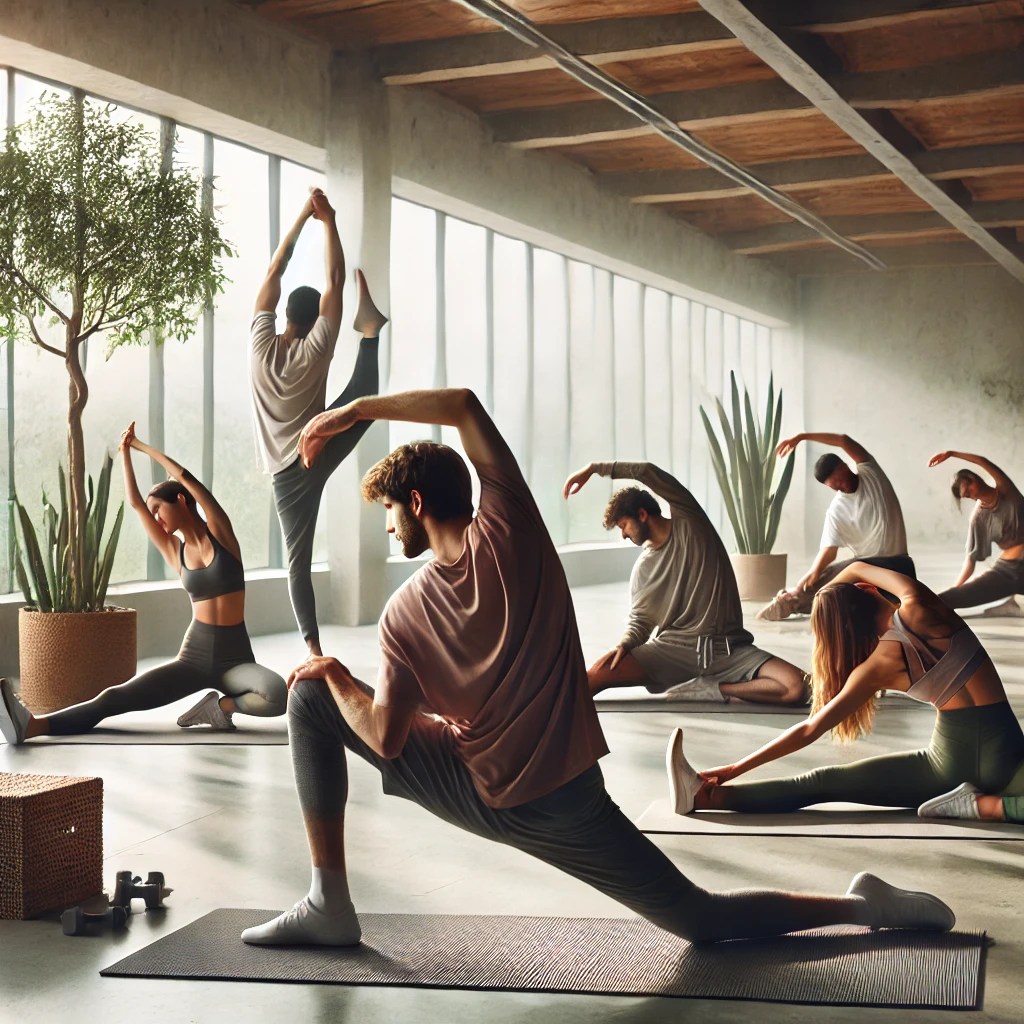
Incorporating Flexibility and Mobility Into Your Routine 🔄
Flexibility and mobility should not be an afterthought in your workout routine. A few key strategies for integrating these exercises are:
- Before Workouts: Start with 5-10 minutes of dynamic stretching to warm up your muscles and prepare your body for exercise.
- After Workouts: Spend 10-15 minutes doing static stretches or a short yoga flow to help your muscles relax and recover.
- Dedicated Sessions: Consider doing a full yoga or Pilates session 1-2 times per week to improve flexibility, mobility, and overall mental well-being.
Here’s an example of a flexibility and mobility routine:
- Warm-up (5 minutes): Dynamic stretches (leg swings, arm circles, lunges with a twist)
- Main Workout (30 minutes): Yoga or Pilates routine
- Downward Dog (1 minute)
- Child’s Pose (1 minute)
- Cobra Pose (30 seconds)
- Leg Circles (10 reps per leg)
- Roll-Up (10 reps)
- The Hundred (1 minute)
- Cool-down (5 minutes): Static stretches (hamstring stretch, quadriceps stretch, shoulder stretch)
Regularly incorporating flexibility and mobility exercises into your routine will improve your performance in strength training and cardio workouts, help prevent injury, and promote overall well-being.

12. Rest and Recovery in Workout Plans 💤
Rest and recovery are often overlooked aspects of fitness, but they are just as important as the workout itself. Whether you’re a beginner or an advanced athlete, your muscles need time to recover in order to grow stronger and perform at their best. Ignoring recovery can lead to overtraining, injuries, and burnout.
a. Importance of Recovery Days 🛌
Recovery is the process by which your body repairs the micro-tears in muscle fibers that occur during exercise. Without sufficient recovery time, muscles don’t have the opportunity to rebuild and become stronger. Overtraining can lead to fatigue, decreased performance, and an increased risk of injury.
- Why Recovery Matters:
- Muscle Repair and Growth: When you work out, especially with strength training, you create tiny tears in your muscle fibers. During recovery, these fibers repair and grow stronger, leading to increased muscle mass and endurance.
- Improved Performance: Rest allows your energy stores (glycogen) to replenish, ensuring that you have enough fuel for your next workout. Without proper rest, you may feel sluggish, and your performance will suffer.
- Prevention of Injuries: Overuse injuries, such as tendonitis or stress fractures, can occur when you don’t allow your muscles and joints enough time to recover. Taking rest days can prevent these injuries and keep you training consistently.
For most people, 1-2 rest days per week are ideal, though this can vary depending on your workout intensity and fitness goals.
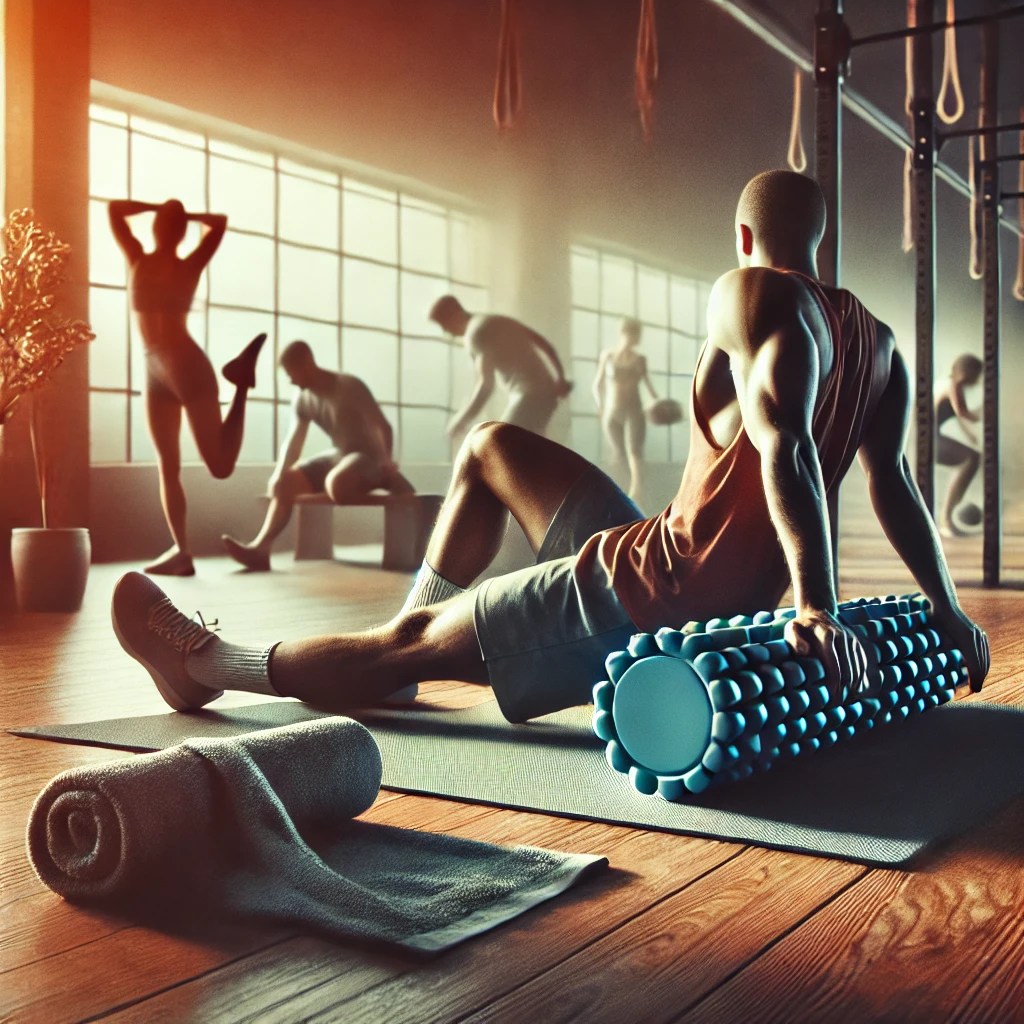
b. Active Recovery Strategies 🔄
Active recovery involves low-intensity exercises that help promote blood flow to the muscles without putting stress on them. This method speeds up the recovery process by delivering more oxygen and nutrients to the muscles, helping to reduce soreness and stiffness.
- Walking or Light Cycling 🚶♀️🚴♂️: These activities increase blood flow without overloading your muscles, making them perfect for recovery days.
- Swimming 🏊♀️: Swimming is a low-impact exercise that works your muscles without causing strain, making it ideal for active recovery.
- Yoga or Stretching 🧘♀️: A light yoga session or a series of stretches can help relieve muscle tension and improve flexibility, aiding in recovery.
- Foam Rolling 🛠️: Self-myofascial release, also known as foam rolling, is an excellent way to reduce muscle soreness and improve blood flow. Use a foam roller to massage tight areas like your calves, hamstrings, or back.
Here’s an example of an active recovery routine:
- Light Cardio (10 minutes): Walking or light cycling
- Stretching (10 minutes): Focus on the major muscle groups worked during your last workout
- Foam Rolling (5 minutes): Target sore areas such as your legs, back, and shoulders
Sleep and Hydration for Optimal Recovery 💤💧
Recovery doesn’t just happen on rest days—it happens while you sleep. During deep sleep, your body releases growth hormones that help repair and grow muscles. Aim for 7-9 hours of quality sleep each night to support recovery. Additionally, staying hydrated is critical for muscle recovery, as dehydration can slow down the repair process and increase muscle soreness.

13. Designing a Personalized Workout Plan 📋
Creating a personalized workout plan is essential for reaching your fitness goals, whether you’re aiming to lose weight, build muscle, or improve endurance. A well-structured plan helps you stay consistent, track progress, and ensure balanced development.
a. Setting Fitness Goals 🎯
Your goals will guide the structure of your workout plan. Start by determining your primary objective. Are you aiming for fat loss, muscle gain, improved strength, or enhanced endurance? Each of these goals will require a different approach.
- SMART Goals: Ensure your goals are Specific, Measurable, Achievable, Relevant, and Time-bound. For example, instead of saying “I want to get stronger,” set a specific goal like “I want to increase my bench press by 20 pounds in the next 12 weeks.”
- Short-term vs. Long-term Goals: Short-term goals (e.g., “run 5 miles without stopping in 6 weeks”) will help keep you motivated on a daily or weekly basis, while long-term goals (e.g., “lose 20 pounds in 6 months”) provide overall direction.
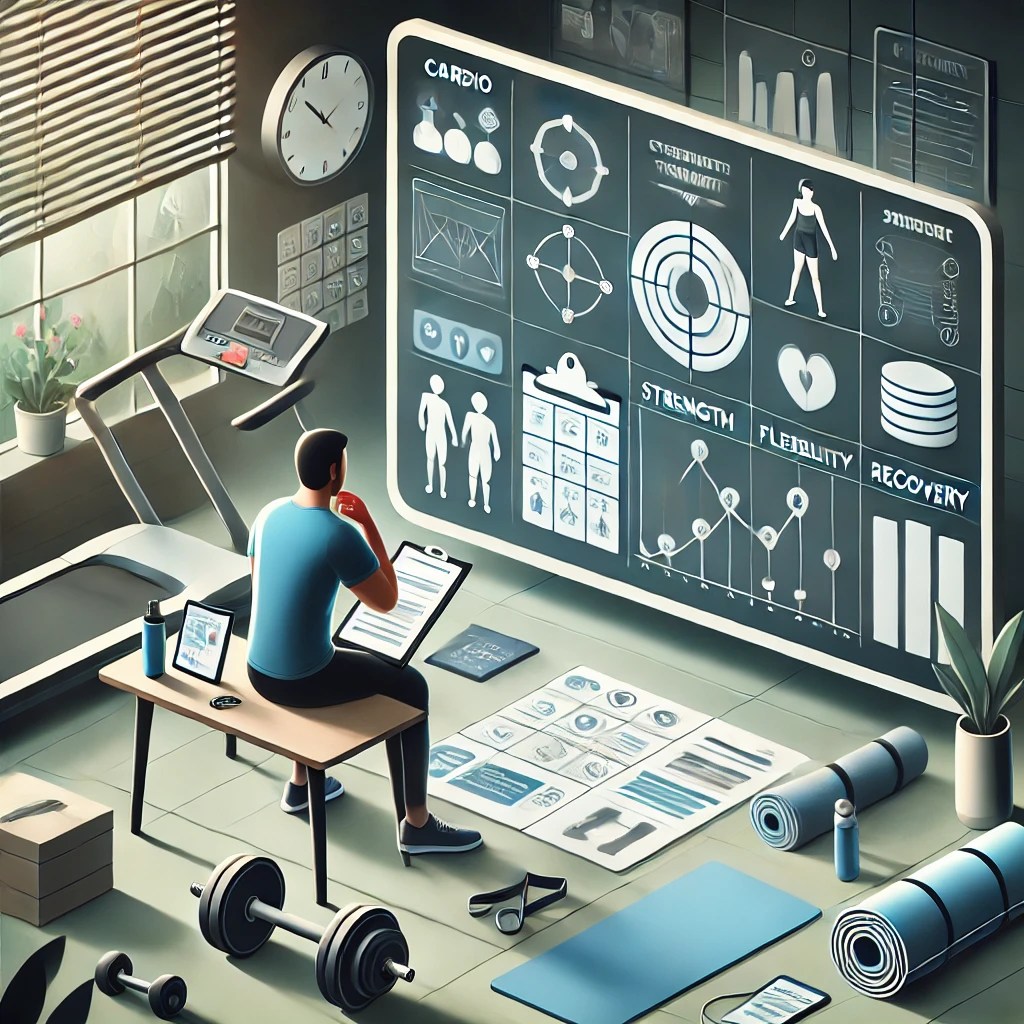
b. Tracking Progress and Adjusting Routine 📊
Tracking your workouts helps you stay accountable and shows where you’re making progress. It also provides insight into what adjustments need to be made as you advance.
- Tracking Tools: Use a workout journal, a fitness app, or even a spreadsheet to log your exercises, weights, reps, sets, and cardio sessions.
- Making Adjustments: As you get stronger, fitter, or more experienced, you’ll need to increase the intensity of your workouts to avoid plateaus. This could involve adding more weight, increasing the number of sets or reps, or incorporating new exercises.
Here’s an example of a beginner’s personalized weekly workout plan:
- Day 1: Full-body strength training (push-ups, squats, lunges, planks)
- Day 2: Cardio (walking, running, or cycling)
- Day 3: Rest or active recovery (yoga, stretching)
- Day 4: Lower-body workout (squats, lunges, glute bridges, leg raises)
- Day 5: Upper-body workout (push-ups, rows, shoulder press, bicep curls)
- Day 6: Cardio (swimming, jogging, or HIIT)
- Day 7: Rest or active recovery
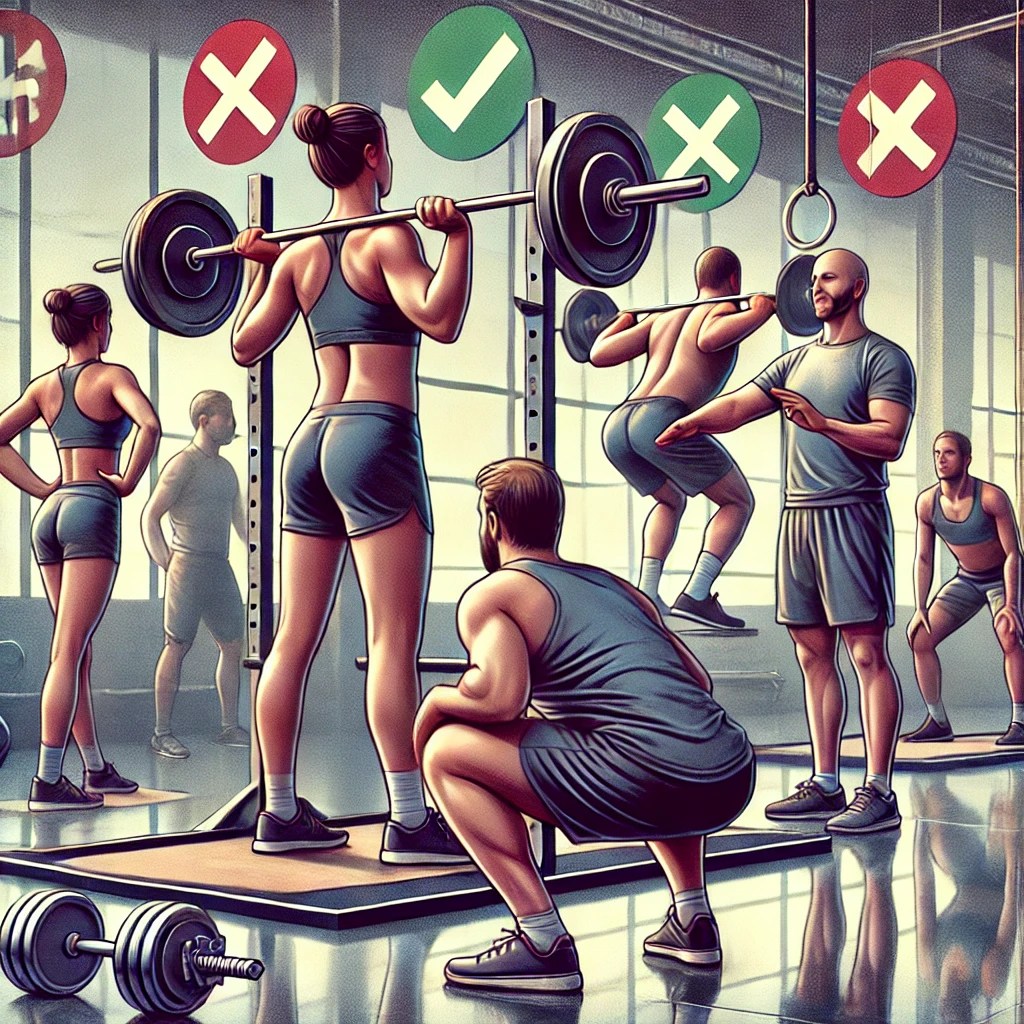
14. Common Mistakes in Workout Routines ⚠️
No matter your fitness level, avoiding common mistakes in workout routines can help you progress safely and effectively. Here are some of the most frequent errors and how to avoid them.
a. Overtraining and Injury Prevention 🚑
Overtraining occurs when you don’t allow your body enough time to recover between workouts. Symptoms of overtraining include constant fatigue, irritability, decreased performance, and frequent injuries.
- Solution: Listen to your body and schedule regular rest days. If you feel unusually fatigued or sore, it’s essential to take a break or engage in light active recovery instead of pushing through.
b. Proper Form and Technique 🛠️
Using improper form during exercises can lead to injuries and reduce the effectiveness of the workout. This is especially common in strength training when lifting heavy weights without proper technique.
- Solution: Focus on quality over quantity. It’s better to lift lighter weights with correct form than heavier weights with poor form. If you’re unsure about your form, consult a personal trainer or watch instructional videos to ensure you’re performing exercises correctly.

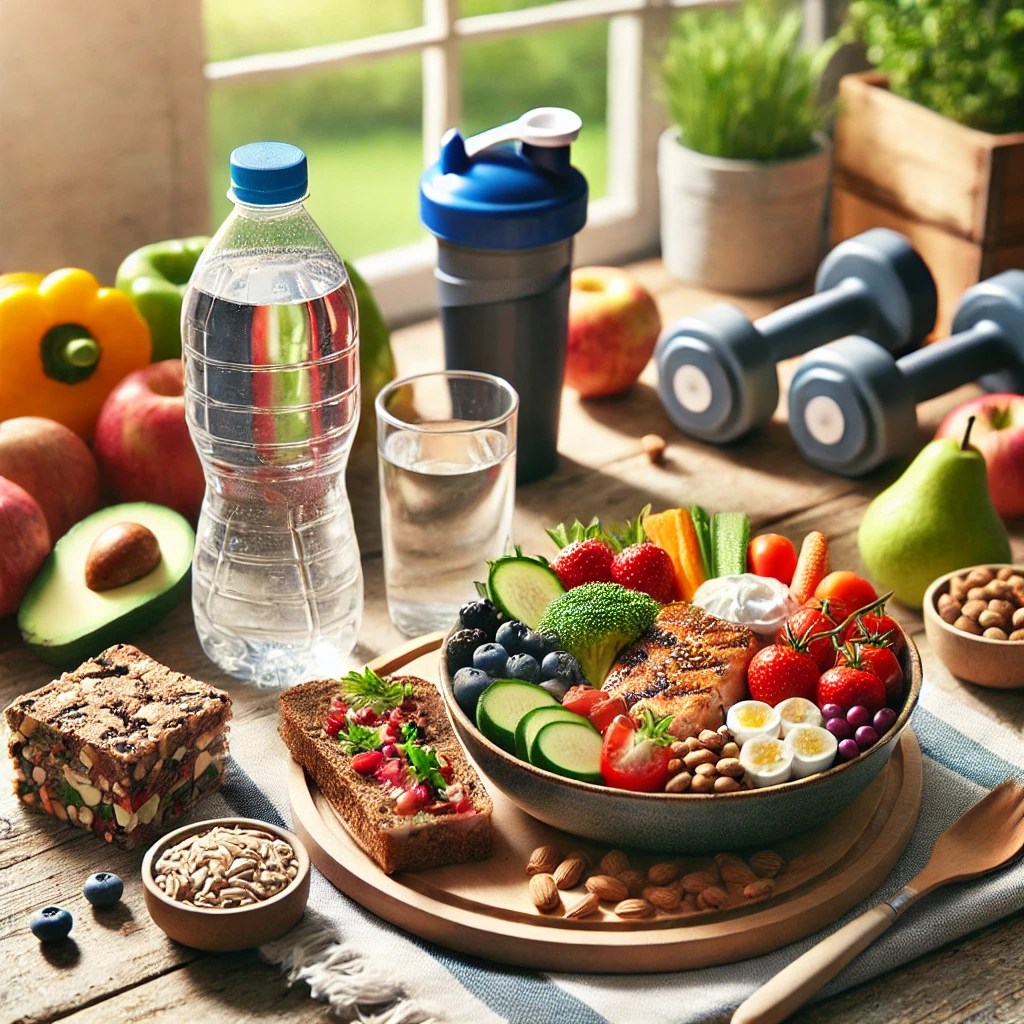
15. Nutrition and Hydration for Workouts 🥗💧
Nutrition and hydration are key factors in optimizing your workout performance and recovery. What you eat and drink before, during, and after your workout can significantly impact your results.
a. Pre-Workout and Post-Workout Nutrition 🍌🥩
- Pre-Workout Nutrition: Fueling your body with the right nutrients before a workout ensures that you have the energy to perform at your best.
- Carbohydrates: Carbs provide the primary source of energy for your muscles. Aim for a light snack like a banana, a slice of whole-grain toast with peanut butter, or yogurt 30-60 minutes before your workout.
- Hydration: Drink water before your workout to ensure your body is properly hydrated.
- Post-Workout Nutrition: After a workout, your body needs the right nutrients to repair muscle fibers and replenish energy stores.
- Protein: Protein is essential for muscle recovery. Aim for 20-30 grams of protein in your post-workout meal, such as chicken, fish, eggs, or a protein shake.
- Carbohydrates: After a workout, your body also needs to replenish glycogen stores. Include complex carbohydrates like brown rice, sweet potatoes, or whole grains in your post-workout meal.
b. Staying Hydrated During Exercise 💧
Dehydration can lead to fatigue, muscle cramps, and decreased performance, so it’s essential to stay hydrated before, during, and after your workouts.
- Before Exercise: Drink 16-20 ounces of water 2-3 hours before exercising.
- During Exercise: Drink water every 15-20 minutes during your workout, especially if you’re sweating heavily.
- After Exercise: Rehydrate by drinking water or an electrolyte-rich sports drink to replace lost fluids.
Proper hydration and nutrition will help you maximize your workouts, recover faster, and achieve better results in the long run.
16. FAQs about Workout Routines ❓
a. How long should a workout routine be?
Most workouts should last between 45 minutes to an hour, depending on the intensity and goals. Beginners can start with shorter sessions (20-30 minutes) and gradually increase their duration.
b. How often should I change my routine?
It’s advisable to change your workout routine every 6-8 weeks to prevent plateaus and keep your body challenged. This could mean adjusting the exercises, reps, sets, or intensity.
c. Can I lose weight with strength training?
Yes! Strength training builds muscle, which increases your metabolism, helping you burn more calories even at rest. Combining strength training with a healthy diet can be highly effective for weight loss.
d. What’s the best workout for overall fitness?
A combination of strength training, cardio, and flexibility exercises is the best approach for overall fitness. This ensures you’re working on endurance, strength, and mobility.
e. How do I stay consistent?
Set specific goals, create a workout plan, track your progress, and find a routine you enjoy. Consistency comes from building habits and setting yourself up for success with achievable goals.
f. How important is sleep for recovery?
Sleep is crucial for muscle recovery and overall health. During sleep, your body repairs muscle tissue and restores energy levels, which is essential for progress and performance.
Conclusion
Workout routines for all levels—beginner, intermediate, and advanced—provide a structured pathway to achieving your fitness goals. Whether you’re focusing on building strength, improving flexibility, or enhancing cardiovascular endurance, finding a routine that fits your level and goals is key. Remember that consistency, proper nutrition, rest, and recovery are critical components of any successful fitness plan.
By integrating cardio, strength training, flexibility, and mobility exercises into your weekly routine, you can develop a well-rounded and sustainable fitness program that supports your physical and mental well-being. No matter your starting point, there’s a workout routine that will help you grow stronger, fitter, and more confident in your abilities. Stay consistent, track your progress, and keep pushing your limits.
 Welcome to FitLife Hub 🌟